When race week rolls around for your next Half or Full Marathon, the most discussed topic is undoubtedly Carbo-Loading.
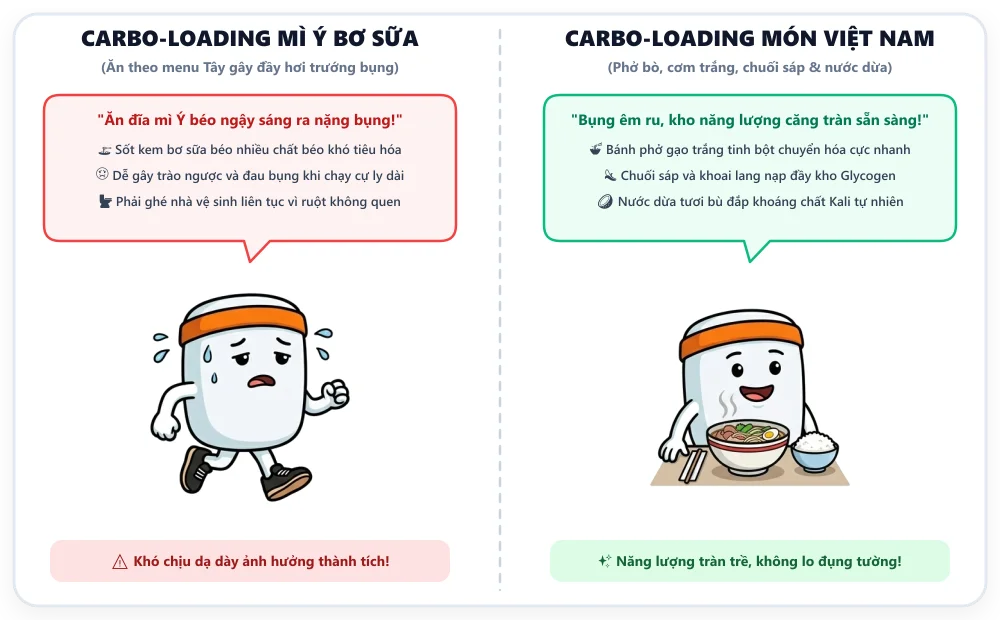
Most international guides push pasta, oatmeal, whole-grain bread, or bagels. But for most Vietnamese runners, suddenly cramming large amounts of Western-style gluten and fiber 2–3 days before a race is a recipe for disaster: bloating, indigestion, and an emergency bathroom break during your race.
The good news: Traditional Vietnamese cuisine is a goldmine for carbo-loading if you know how to pick the right fuel.
1. The Biology of Carbo-Loading: What Do We Really Need?
The body stores carbohydrates as Glycogen in two main reservoirs:
- Liver Glycogen: About 80g – 100g (maintains blood sugar for the brain).
- Muscle Glycogen: About 400g – 500g (the primary fuel for your legs).
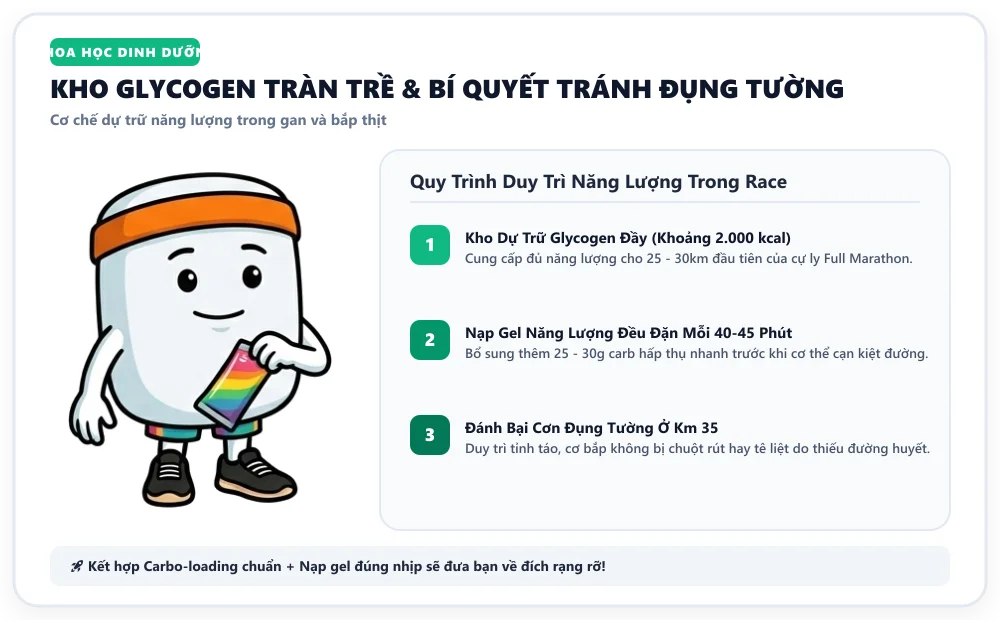
This total reserve provides roughly 1,800 – 2,000 kcal—enough for about 25km – 30km of continuous running. Once these stores are depleted, you hit “the wall”: heavy legs, dizziness, and a rapid drop in pace.
┌─────────────────────────────────────────────────────────────┐
│            ACSM CARBO-LOADING STANDARDS                     │
├─────────────────────────────────────────────────────────────┤
│ • Half Marathon (21K): 6 – 8g carb / kg (24h-36h out)       │
│ • Full Marathon (42K): 8 – 10g carb / kg (36h-48h out)      │
│ • 60kg runner for FM needs: 60 × 8g = ~480g carbs/day       │
└─────────────────────────────────────────────────────────────┘
The golden rule: Carbo-loading is about increasing your carb intake to 70% – 75% of your total calories while reducing fats and fiber. It is NOT about overeating and stuffing yourself until you gain fat!
2. Why Vietnamese Food Is the Perfect Choice
Rice-based carbohydrates offer distinct advantages over Western menus:
- Easily Digestible: White rice, bánh phở, and fresh vermicelli are low-fat and gluten-free, preventing gut irritation.
- Low Residue: Minimizing fiber intake 2 days before the race keeps your gut “clean,” avoiding the need for an emergency pit stop on race morning.
- Natural Micronutrients: Steamed wax bananas, golden sweet potatoes, and coconut water provide carbs alongside potassium and magnesium, which help prevent muscle cramping.
3. Sample Vietnamese Carbo-Loading Menu (3 Days Pre-Race)
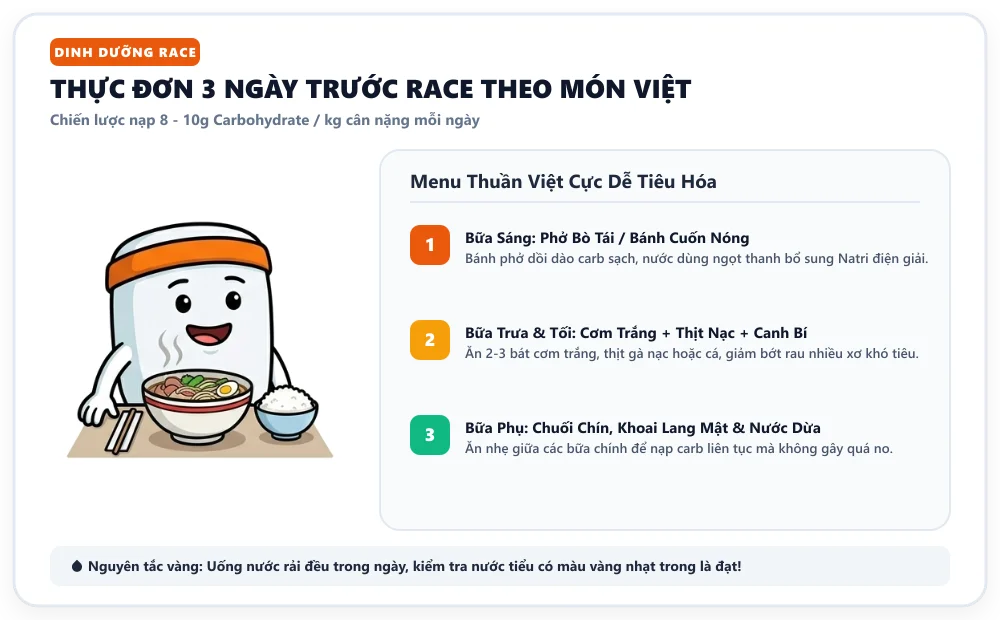 White rice, lean meat, and bananas—the ultimate fast-acting, clean fuel.
This schedule is designed for a runner weighing 55kg – 65kg.
🗓️ D-3 (Thursday)
- Goal: Gradually increase carb ratio, stay hydrated.
- Breakfast: 1 bowl of phở bò/gà (lean cuts, easy on the fat) + 1 glass of honey orange juice.
- Morning Snack: 1 banana + 300ml water.
- Lunch: 2 bowls of white rice + braised fish/lean pork + small side of steamed wax gourd.
- Afternoon Snack: 1 steamed sweet potato or 2 slices of honey sandwich bread.
- Dinner: 1 bowl of pork noodle soup or ginger chicken rice.
🗓️ D-2 (Friday) — “The Carb Peak”
- Goal: Reach max intake, strictly cut out grease and raw vegetables.
- Breakfast: 1 bowl of fish cake noodle soup + 1 glass of sugarcane juice (low ice).
- Morning Snack: 2 steamed wax bananas or steamed cassava cake.
- Lunch: 2.5 bowls of white rice + honey-glazed grilled chicken breast + potato/carrot soup with minced meat.
- Afternoon Snack: 1 fresh coconut water + 2 grain cookies.
- Dinner: 1 plate of egg-fried rice (minimal oil) or stir-fried noodles with lean beef.
🗓️ D-1 (Saturday) — “Keep It Clean & Early”
- Goal: Eat dinner before 18:30 so your stomach is empty by bedtime.
- Breakfast: Chicken vermicelli soup (no skin).
- Lunch: White rice with braised mackerel + seaweed tofu soup.
- Dinner (Before 18:30): 1.5 - 2 bowls of hot white rice + scrambled eggs/lean meat + small cup of electrolyte drink. (Strictly no raw seafood, snails, spicy food, or alcohol).
- Before bed (21:00): Sip 200ml of warm water.
4. Race Day Breakfast (3 Hours Pre-Gun)
 Fueling at 02:00 AM ensures your body has time to digest.
If the Gun Time is 04:00 AM, wake up at 01:30 – 02:00 AM for your final meal:
┌─────────────────────────────────────────────────────────────┐
│               RACE DAY BREAKFAST COMBO                      │
├─────────────────────────────────────────────────────────────┤
│ 1. 2 slices of bread with fruit jam / honey                 │
│ 2. 1 ripe banana (for potassium & fast-acting carbs)        │
│ 3. 200ml – 300ml electrolyte drink (sip slowly)             │
│ 4. (Optional): 1 small black coffee (if it helps you prep)  │
└─────────────────────────────────────────────────────────────┘
Tip: 15 minutes before the start, take one Energy Gel with 100ml of water for an immediate blood glucose boost.
5. Deadly Mistakes to Avoid
- ❌ Excessive fiber (raw veggies, salad): Causes heavy waste buildup and increases the risk of colon spasms during the race.
- ❌ Greasy, oily food: Fat slows down gastric emptying, leaving food sitting in your stomach all night.
- ❌ Trying local specialties for the first time: Stick to what your body knows. Save the local food exploration for after you’ve received your finisher medal!
🛠️ Race Day Toolkit:
- 👉 Calculate your Gel and hydration needs: Gel & Electrolyte Calculator.
- 👉 Energy and nutrition breakdown: Physical Performance Nutrition Tool.
- 👉 Checklist for gear, sleep, and pacing strategy: Race Day Plan & Checklist.
Frequently Asked Questions (FAQ)
Will carbo-loading make me gain weight?
You might see a slight increase of 1kg – 2kg, but don’t worry! For every 1 gram of glycogen stored, the body stores about 3 grams of water. This water reserve is released during the race to cool your muscles over the 42km course.
Do 10K or Half Marathon (21K) runners need 3 days of carbo-loading?
Not necessary. A standard diet plus a carbohydrate-rich breakfast 2-3 hours before the race is sufficient. 3-day carbo-loading is primarily for Full Marathons or Ultra Trails exceeding 90 minutes.
Should I have phở bò or broken rice with ribs the night before?
Limit these. Beef broth is often fatty, and grilled ribs are heavily seasoned; both slow down digestion and can cause bloating or nausea the next morning. Your safest bet is white rice with lean chicken or lean pork and light veggie soup.
💬 Final Thoughts
Carbo-loading isn’t magic, but a consistent, science-backed fueling strategy using familiar food ensures your legs won’t be “starving” during those critical final miles from km 30 to the finish line.
