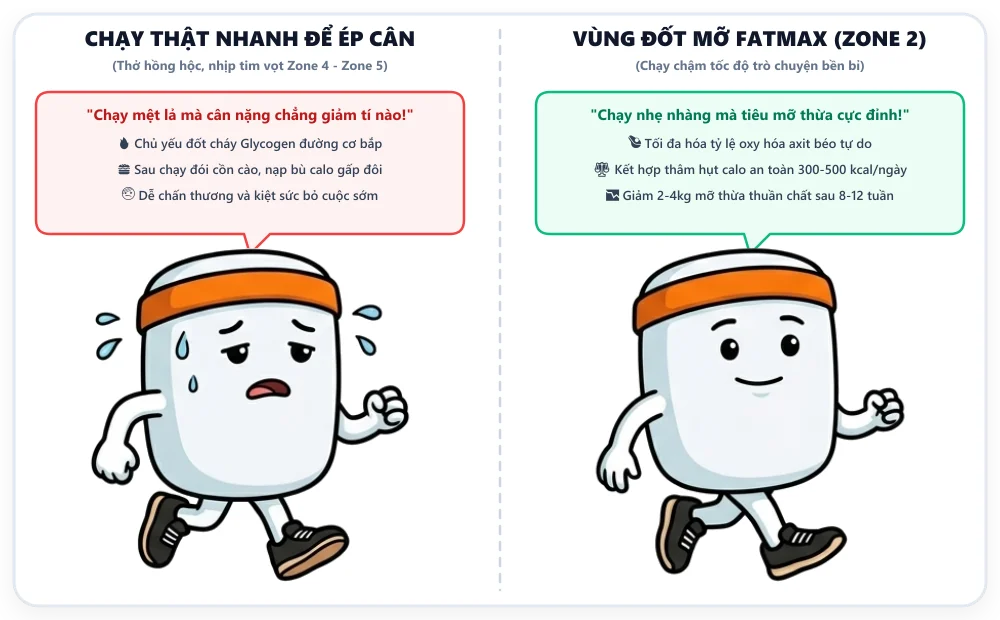
“I’ve been running for two weeks, 30 minutes a day, drenched in sweat—so why is the scale not moving, or even showing a 1kg gain?” This is the most common frustration for anyone starting a running journey with the goal of rapid weight loss.
Sports science recognizes running as one of the most effective ways to burn calories per minute. However, fat oxidation and body recomposition are complex biochemical processes. If you don’t understand the energy balance, optimal heart rate zones, and physiological water retention, you’re likely to get discouraged and quit before your body can start seeing results.
The Energy Equation: How Many Kilometers to Burn 1kg of Fat?
Biochemically, 1kg of pure body fat contains about 9,000 kcal. However, human adipose tissue isn’t just lipids; it includes water, proteins, and cell membranes. Therefore, in sports medicine, 1kg of body fat is roughly equivalent to 7,700 kcal.
[ENERGY EXPENDITURE RUNNING ON FLAT GROUND]
Energy (kcal) ≈ 0.9 × Body Weight (kg) × Distance (km)- A person weighing 70kg running 5km will burn approximately: $0.9 \times 70 \times 5 \approx 315 \text{ kcal}$.
- To create a deficit of 1kg of fat (7,700 kcal) solely through running, that person would need to accumulate a total of 122 km (assuming daily caloric intake remains at maintenance levels).
This explains why after the first 10 days (totaling only 20–30 km), you won’t see the scale drop by several kilograms like the exaggerated claims on social media suggest.
FatMax Heart Rate Zone & The Paradox of Running Fast
A common mistake for weight-loss seekers: “I have to run as fast as possible, gasping for air and drenched in sweat for the fat to melt.” Metabolic physiology proves the exact opposite through the Fuel Crossover Concept (Brooks & Mercier).
Fuel Utilization Rate (%)
100% ┌─────────────────────────────────────────────────────────────┐
     │ ░░░░░░░░░░░░░░░░░░░░░░░░░░░░░░░░░░░░░░░░░░░░░░ [CARBOHYDRATE]
 80% │ ░░░░░░░░░░░░░░░░░░░░░░░░░░░░░░░░░░░░░░░░░░░░░░░░░░░░░░░░░░░
 60% │ ▓▓▓▓▓▓▓▓▓▓▓▓▓▓▓▓▓▓▓▓ [FATMAX] ░░░░░░░░░░░░░░░░░░░░░░░░░░░░░░
 40% │ ▓▓▓▓▓▓▓▓▓▓▓▓▓▓▓▓▓▓▓▓▓▓▓▓▓▓▓▓▓▓▓▓▓▓▓▓▓▓▓▓ [FAT - LIPID]
 20% │ ▓▓▓▓▓▓▓▓▓▓▓▓▓▓▓▓▓▓▓▓▓▓▓▓▓▓▓▓▓▓▓▓▓▓▓▓▓▓▓▓▓▓▓▓▓▓▓▓▓▓▓▓▓▓▓▓▓▓▓
  0% └───────────────────────┬─────────────────────────────────────┘
                          Zone 2                                Zone 5
                       (60-70% HRmax)                       (90-100% HRmax)
1. Running at High Heart Rate (Zone 4 - Zone 5 / Anaerobic)
- Muscles experience local oxygen deficit; there isn’t enough time for Beta-Oxidation to break down long-chain fatty acids.
- The body is forced to use Glycogen (carbs) as the primary fuel source (>85% of energy).
- The downside: When blood sugar drops sharply after a hard run, the brain triggers the hunger hormone Ghrelin, leading to cravings that often cause you to eat back more calories than you burned.
2. Running in Zone 2 (The FatMax Zone - 60% to 70% HRmax)
- Blood flow provides ample oxygen to muscle cells, activating mitochondrial enzymes to break down free fatty acids into ATP.
- The percentage of energy derived from fat reaches its peak (60%–70% of total calories burned).
- The body avoids glucose depletion, minimizing post-run cravings and preserving muscle mass.
Calculate your accurate heart rate zones here: Heart Rate Zone Tool.
Decoding the Paradoxical Weight Gain in the First 2–3 Weeks
If you step on the scale and see a 0.5kg to 1.5kg increase in the first two weeks, rest assured you are not gaining fat. Your body is undergoing three benign physiological adaptations:
┌────────────────────────────────────────────────────────────────────────┐
│               3 REASONS FOR INITIAL PARADOXICAL WEIGHT GAIN            │
├────────────────────────────────────────────────────────────────────────┤
│ 1. Micro-tear Edema                                                    │
│    └── Muscles unaccustomed to impact suffer minor micro-tears. The    │
│        body holds water in interstitial spaces to transport white      │
│        blood cells and nutrients for repair.                           │
│                                                                        │
│ 2. Glycogen Storage & Bound Water                                      │
│    └── Muscles increase storage capacity. For every 1 gram of glycogen │
│        stored in the liver and muscles, 3 to 4 grams of water are held. │
│                                                                        │
│ 3. Plasma Volume Expansion                                             │
│    └── The cardiovascular system adapts to aerobic exercise by         │
│        increasing blood plasma volume by 10–15% within 10–14 days.     │
└────────────────────────────────────────────────────────────────────────┘
This fluid retention peaks after 2–3 weeks and subsides as the body adapts. From week 4 onward, your actual fat-loss trend will begin to show clearly.
12-Week Science-Backed Weight Loss & Recomposition Plan
To lose 3kg to 5kg of fat sustainably without losing muscle or injuring your joints, follow this 3-phase plan:
| Phase | Weekly Structure | Physiological Goal | Nutrition Strategy |
|---|---|---|---|
| Phase 1 (Wks 1–4) | 3 sessions/week: [2 min run + 2 min walk] x 30 mins | Adapt tendons/bones, activate aerobic enzymes | Cut soft drinks, bubble tea, fast food; 2.5L water/day |
| Phase 2 (Wks 5–8) | 3 x Zone 2 runs (35–45 mins) + 1 strength session | Maximize FatMax oxidative capacity | 300–400 kcal/day deficit, 1.4g–1.6g Protein/kg |
| Phase 3 (Wks 9–12) | 3 x Zone 2 runs (45–60 mins) + 1 strides + 2 strength | Enhance mitochondrial density, deep fat burn | Maintain calorie deficit, consume whole foods |
Fasted Running vs. Fed Running
Many believe fasted morning runs are the “golden key” to burning double the fat. The scientific truth:
| Aspect | Fasted Run | Fed Run |
|---|---|---|
| Instant fat oxidation rate | 15–20% higher during run | Moderate (burns both fat and glycogen) |
| Sustainable intensity | Short/easy runs only (<45 min, Zone 1-2) | Can handle harder/longer efforts, higher total burn |
| Muscle breakdown risk | Higher due to low amino acids in blood | Lower; muscles protected by glycogen stores |
| Total 24h fat burn | Equivalent | Equivalent (if net deficit is same) |
For details, read our deep dive: Fasted Runs: Pros and Cons.
3 Pillars of Muscle Preservation While Losing Fat
If you only run and cut calories aggressively, the body will break down muscle tissue for energy, slowing your Basal Metabolic Rate (BMR) and leading to a “skinny fat” physique. To stay toned, you must focus on:
[PILLAR 1: ADEQUATE PROTEIN INTAKE]
- Aim for 1.4g to 1.8g of protein per kg of body weight daily.
- Distribute into meals of 25–35g protein from lean meats, chicken breast, eggs, fish, and tofu.
[PILLAR 2: STRENGTH TRAINING]
- Dedicate 2 sessions/week (30–45 mins) to compound movements: Squats, Lunges, Deadlifts, Push-ups.
- Mechanical tension signals your body to retain lean muscle mass.
[PILLAR 3: MAINTAIN NEAT]
- Avoid being sedentary for the other 23.5 hours after a 30-minute run.
- Keep walking, taking the stairs, and staying active to keep your Non-Exercise Activity Thermogenesis (NEAT) high.
Frequently Asked Questions (FAQ)
1. How many kilometers should I run per week?
Beginners should aim for 15–25 km/week (3–4 sessions). After 2–3 months of adaptation, you can gradually increase to 25–40 km/week.
2. Does wearing a sauna suit help burn belly fat faster?
Absolutely not. Wearing a sauna suit only causes excessive fluid and mineral loss due to heat, creating a temporary “fake” weight drop. This water weight returns immediately upon rehydration. It also increases the risk of heat stroke.
3. What to eat post-run to avoid weight gain?
Within 45 minutes of a run, have a light meal with a 3:1 ratio of moderate-GI Carbohydrates and high-quality Protein (e.g., Greek yogurt with half a banana). This replenishes glycogen and repairs muscle without promoting fat storage.
Nutritional advice: A calorie deficit (Calories In < Calories Out) is the ultimate law of weight loss. Combine Zone 2 running with a balanced diet to make running a sustainable, healthy lifestyle.
