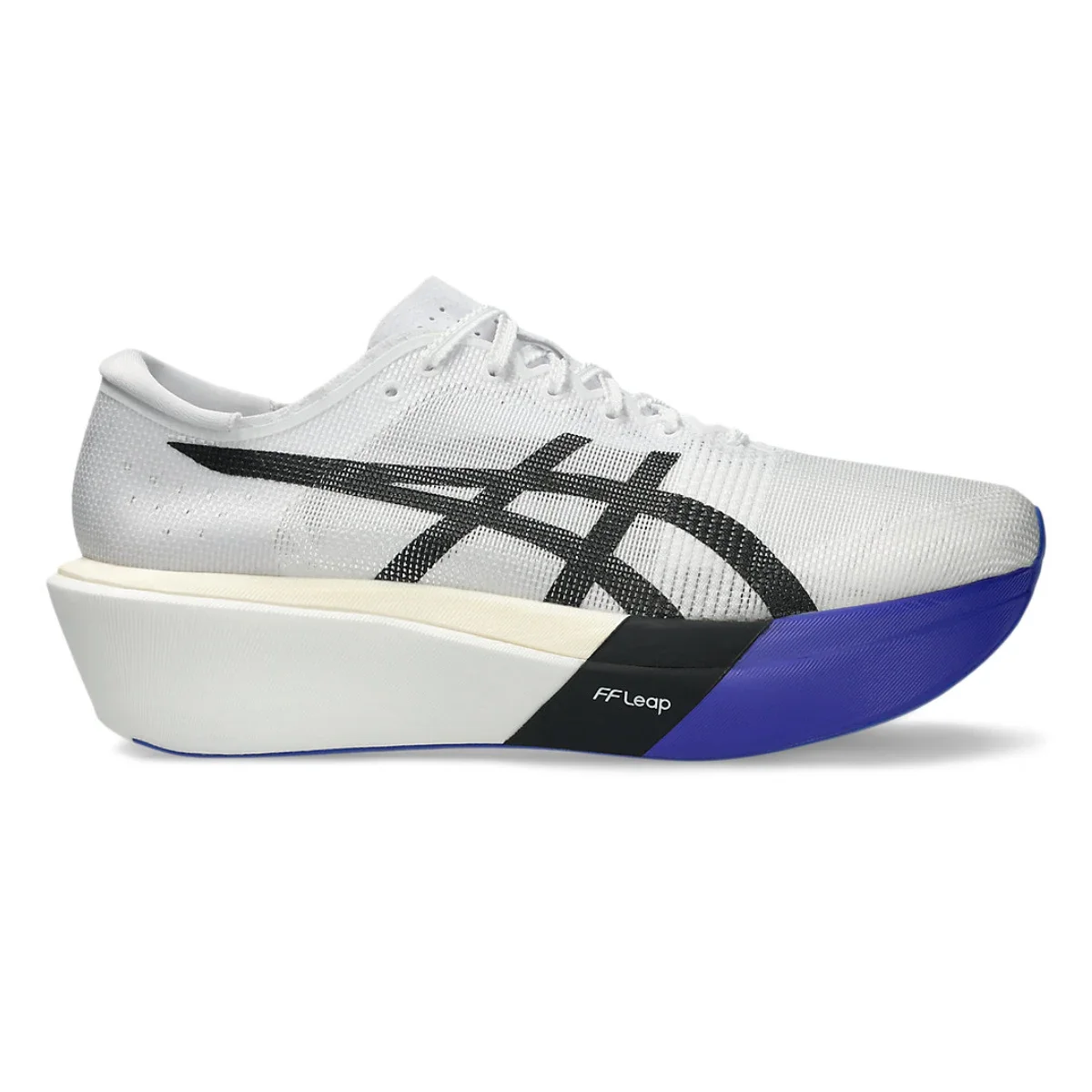
Welcome back to Thích Chạy Bộ. As a recreational runner standing 165cm and weighing 57kg, I’m always hyper-aware of weight, energy return, and cadence optimization. The “super shoe” arms race is relentless, but ASICS has carved out a unique path: they don’t force you to adapt to the shoe; they build the shoe to serve your specific biomechanics.
The Metaspeed lineup is the definitive expression of this philosophy. Beyond the classic Sky (for stride-lengtheners) and Edge (for cadence-boosters), ASICS has shocked the market with the Metaspeed Ray—a shoe that pushes lightweight engineering to an absurd level.
Testing these three is like driving three different F1 cars. After hundreds of kilometers—from brutal intervals and tempo runs to grueling long-distance marathon efforts—here is my deep dive into these speed machines.
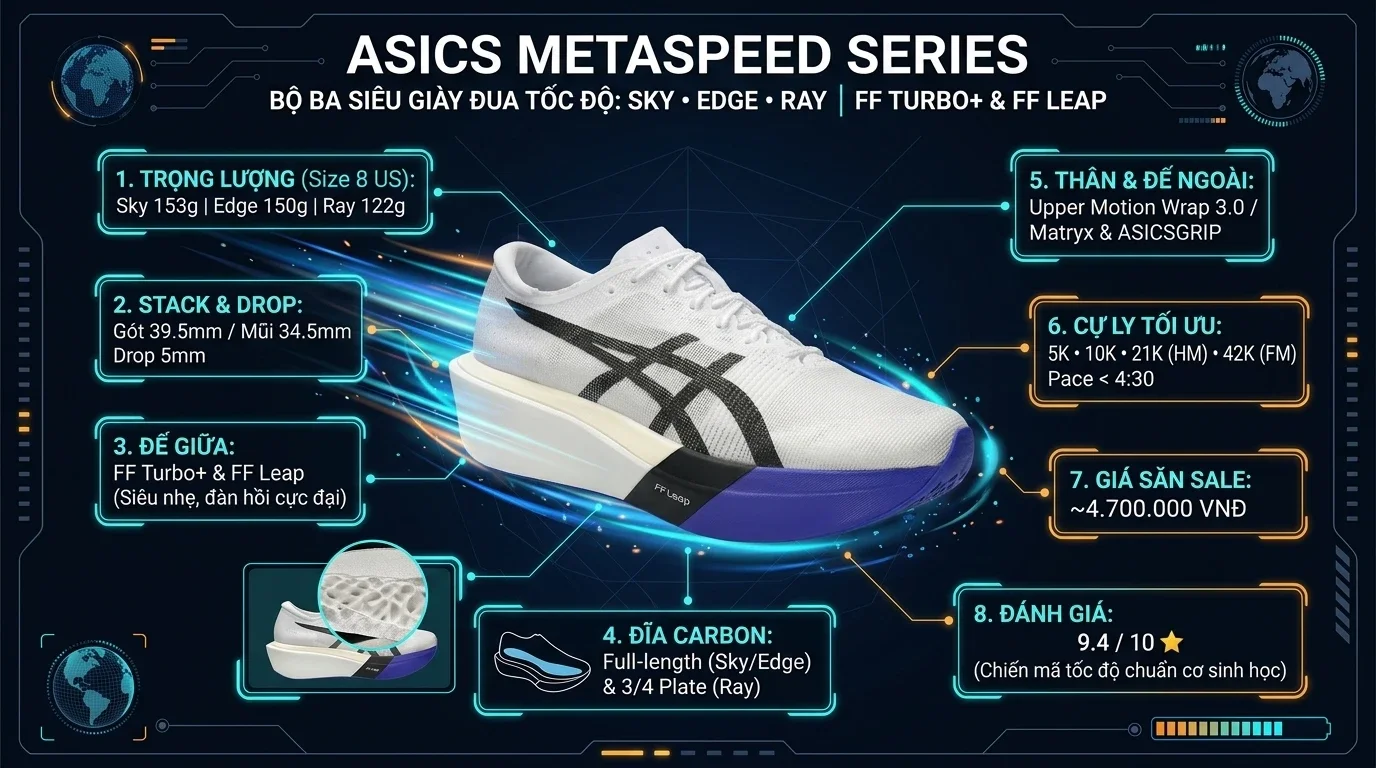
1. Lab Specs & Real-World Weights
Here is the breakdown based on production models:
- Weight (Size 8 US):
- Metaspeed Sky: 153g
- Metaspeed Edge: 150g
- Metaspeed Ray: 122g
- Stack Height: 39.5mm heel / 34.5mm forefoot
- Heel Drop: 5 mm
- Midsole Foam:
- Metaspeed Sky: FF Turbo+ (top) & FF Leap (bottom)
- Metaspeed Edge: FF Leap (top) & FF Turbo+ (bottom)
- Metaspeed Ray: 100% lightweight FF Leap
- Carbon Plate:
- Metaspeed Sky: Full-length, high placement
- Metaspeed Edge: Full-length, low placement
- Metaspeed Ray: 3/4-length
- Upper:
- Metaspeed Sky & Edge: Motion Wrap 3.0
- Metaspeed Ray: Matryx premium weave
- Outsole: ASICSGRIP
- Verdict: 9.4 / 10 ⭐
💡 Tip: Compare these specs against other top racers using our Shoe Compare tool.
2. On-Feet Experience
The immediate “wow” factor is the weight. At 57kg, the 153g/150g weight of the Sky and Edge already feels like nothing, but the 122g Ray is mind-bending. It feels like you’re holding a shell rather than a shoe.
Step-in feel is plush yet resilient. The Sky feels flat and bouncy, while the Edge has an inherent rocker that pushes you forward. The Ray is the most direct; ground feel is immediate with zero lag. Construction quality is classic Japanese precision—everything is locked in tight.
3. Fit
- Sizing: True to Size (TTS). The toe box provides ample room for natural splay, even with the weight-shaving design.
- Lockdown: The Motion Wrap 3.0 upper on the Sky and Edge acts like a second skin. It doesn’t soak up water, maintaining its weight in the rain. The Matryx upper on the Ray is stiffer and more structured, perfect for tight cornering.
- Heel & Tongue: The thin, unpadded tongue stays put. Combined with the contoured heel collar, heel slippage is non-existent even at race pace.
💡 Unsure about your size? Use our Shoe Finder for the perfect recommendation.
4. Cushion
The mix of FF Turbo+ (bouncy/light) and FF Leap (durable/cushioned) defines the ride.
Metaspeed Sky: Stride Runners
ASICS places FF Turbo+ closest to your foot with a high-set, flat carbon plate. This compresses the foam, giving you a vertical, explosive pop that helps extend your stride length.
Metaspeed Edge: Cadence Runners
For those (like me) who maintain 185–195 spm, the Edge puts FF Leap on top for comfort, with the carbon plate curved low. It acts as a rocker, rolling you forward effortlessly, saving your calves and hamstrings.
Metaspeed Ray: Pure Speed
100% FF Leap and a 3/4 plate. The feel is firm and lightning-quick. There is no “foam lag”—it’s pure energy return for runners with strong ankles.
5. Stability
- Forefoot Width: Both Sky and Edge feature a widened forefoot, providing a stable platform despite the 39.5mm stack.
- Versus: The Edge is the most stable due to the lower plate position. The Ray offers a more natural, flexible feel through the 3/4 plate, which excels on tight urban corners.
6. Ride & Distances
- Sweet Spot: These wake up at a 4:30/km pace or faster. At slower speeds, the carbon plates can feel rigid.
- Transitions: The rocker geometry makes toe-off buttery smooth.
- Recommended Distances:
- 5K/10K: Metaspeed Ray is king.
- Half Marathon: All three excel.
- Marathon: Sky and Edge are the clear winners, providing the leg-saving protection needed after the 30km mark.
7. Upper & Outsole
- Upper: Motion Wrap 3.0 is exceptionally breathable—you can literally see through it. Matryx on the Ray is a premium, high-durability upgrade.
- Outsole: ASICSGRIP is top-tier. Even with minimalist rubber coverage to save weight, grip on wet pavement is phenomenal.
8. Walking & Lifestyle
Let’s be clear: These are race-day tools. The carbon plate and rocker make them feel awkward and unstable for casual walking. Using them for anything other than high-quality sessions or racing is a waste of the foam’s lifespan.
9. Who Should Choose Which?
- Metaspeed Sky: You increase pace by lengthening your stride; you are a mid/forefoot striker who loves a bouncy, vertical feel.
- Metaspeed Edge: You increase pace by increasing cadence; you want a smooth, rolling transition.
- Metaspeed Ray: You have elite-level mechanics and want the absolute lightest shoe for short-to-mid distance explosive efforts.
10. Conclusion & Ratings
ASICS has mastered the “biomechanics-first” approach. There is a Metaspeed here for every type of runner.
Rating:
- Fit: 9/10
- Cushion: 9.5/10
- Stability: 8.5/10
- Ride: 9.5/10
- Value: 8/10
- OVERALL: 9.4/10 ⭐
11. FAQ
- How do I identify my style? Check your Garmin/Strava data. If your cadence jumps significantly when speeding up, you’re a Cadence runner (Edge). If your cadence stays steady but your stride length grows, you’re a Stride runner (Sky).
- Can heel strikers wear these? Yes, especially the Edge, thanks to its smooth heel rocker.
- Durability? 400–500km. These hold their pop significantly longer than most super shoes.