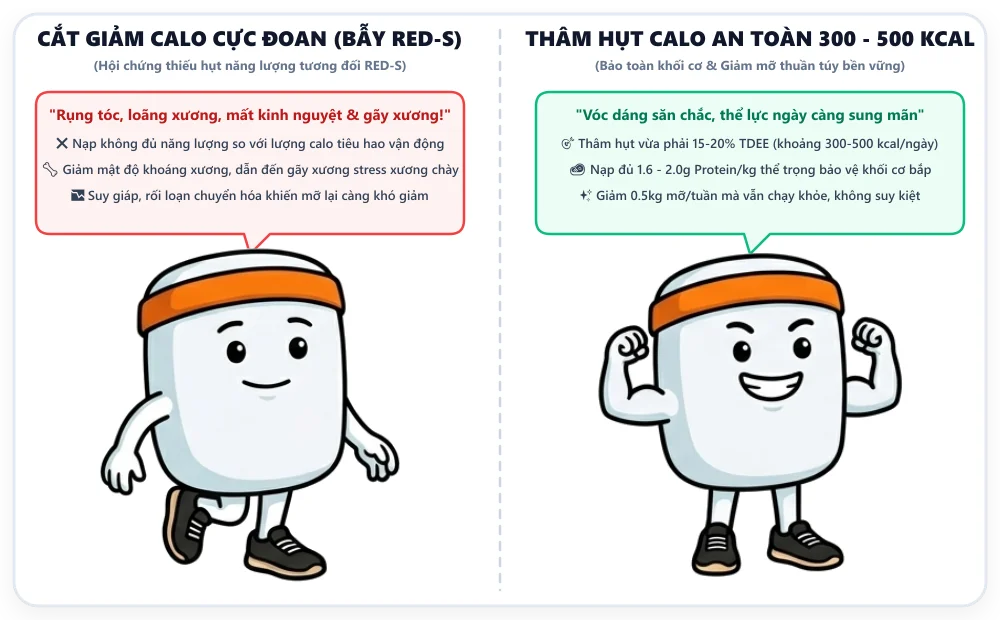
“Run more, eat less to lose weight faster”—this extreme mindset is one of the most dangerous traps in endurance sports. Thousands of runners, from beginners to semi-pro athletes, have pushed their bodies into severe biochemical depletion due to an obsession with being lighter to run faster.
The consequences go far beyond burnout and performance plateaus. They lead to systemic endocrine disruption, amenorrhea in women, suppressed testosterone in men, premature osteoporosis, and recurring stress fractures.
In international sports medicine, this condition is officially defined by the International Olympic Committee (IOC) as Relative Energy Deficiency in Sport (RED-S).
Energy Availability (EA) & The RED-S Biological Formula
According to the IOC Consensus Statement, RED-S is not merely a simple caloric imbalance; it stems from prolonged Low Energy Availability (LEA).
                  Energy Intake (kcal) - Exercise Energy Expenditure (kcal)
EA (kcal/kg FFM) = ──────────────────────────────────────────────────────────
                                  Fat-Free Mass (FFM in kg)
Where:
- Energy Intake: Total calories consumed per day.
- Exercise Energy Expenditure (EEE): Calories burned during runs and gym sessions.
- Fat-Free Mass (FFM): Total body weight minus all fat mass (includes muscle, bone, organs, and water).
[ENERGY AVAILABILITY (EA) SCALE]
├── > 45 kcal/kg FFM/day (OPTIMAL ZONE): Sufficient energy for recovery, muscle, bone & endocrine health.
├── 30 - 45 kcal/kg FFM/day (CONTROLLED WEIGHT LOSS): Safe short-term deficit for runners.
└── < 30 kcal/kg FFM/day (DANGER ZONE - RED-S RISK):
    The body automatically "shuts down" basic physiological functions to conserve energy for survival!
6 Physiological Systems Devastated by RED-S
When EA drops below 30 kcal/kg FFM/day for several weeks, the brain perceives the body as being in a state of severe famine. To maintain heart and brain function, the body cuts energy to “non-essential” systems:
┌────────────────────────────────────────────────────────────────────────┐
│                   PHYSIOLOGICAL SYSTEMS DAMAGED BY RED-S               │
├────────────────────────────────────────────────────────────────────────┤
│ 1. Endocrine & Reproductive System (Endocrine Disruption)              │
│    ├── Women: Hypothalamic-Pituitary-Ovarian axis suppression, low     │
│    │   estrogen ➔ Delayed or absent periods (Functional Hypothalamic   │
│    │   Amenorrhea).                                                    │
│    └── Men: Lower LH levels, significant drop in Testosterone ➔ Low    │
│        libido, erectile dysfunction, muscle loss.                      │
│                                                                        │
│ 2. Bone Health (Impaired Bone Health)                                  │
│    ├── Low estrogen/testosterone reduces osteoblast activity and       │
│    │   increases bone resorption by osteoclasts.                       │
│    └── Result: Osteopenia, stress fractures in the tibia, heel, and    │
│        femoral neck.                                                   │
│                                                                        │
│ 3. Metabolic Function (Metabolic Down-regulation)                      │
│    ├── Reduced free Triiodothyronine (T3) thyroid hormone.              │
│    └── Basal Metabolic Rate (BMR) drops: You eat very little but the   │
│        body refuses to shed fat to ensure survival.                    │
│                                                                        │
│ 4. Immune System (Immunological Impairment)                            │
│    └── Reduced respiratory IgA antibodies, frequent colds, sore        │
│        throats, and persistent infections.                             │
│                                                                        │
│ 5. Gastrointestinal Function (Gastrointestinal Issues)                 │
│    └── Delayed gastric emptying (gastroparesis), intestinal villi      │
│        atrophy, chronic bloating, and constipation.                    │
│                                                                        │
│ 6. Psychological & Cognitive Health                                    │
│    └── Anxiety, depression, food obsession, memory loss, and poor      │
│        focus.                                                          │
└────────────────────────────────────────────────────────────────────────┘
Comparison: Healthy Weight Loss vs. The RED-S Spiral
| Feature | Healthy Weight Loss | RED-S Trap (Low Energy Availability) |
|---|---|---|
| Caloric Deficit | 300 – 450 kcal/day (10–15% TDEE) | Deficit of >800 - 1,200 kcal/day |
| Energy Availability (EA) | Maintain 35 – 40 kcal/kg FFM/day | Drops below 30 kcal/kg FFM/day |
| Protein Intake | Ensure 1.6g - 2.0g Protein/kg/day | Low protein, mostly greens and fasting |
| Running Performance | Steady endurance, quick recovery | Heavy legs, spiked heart rate, plateaued speed |
| Menstrual Cycle (Women) | Regular | Absent for 3+ consecutive months |
| Mood & Sleep | Alert, 7.5–8 hours of deep sleep | Insomnia, irritability, calorie obsession |
Strategy: Periodized Fueling (Fuel for the Work Required)
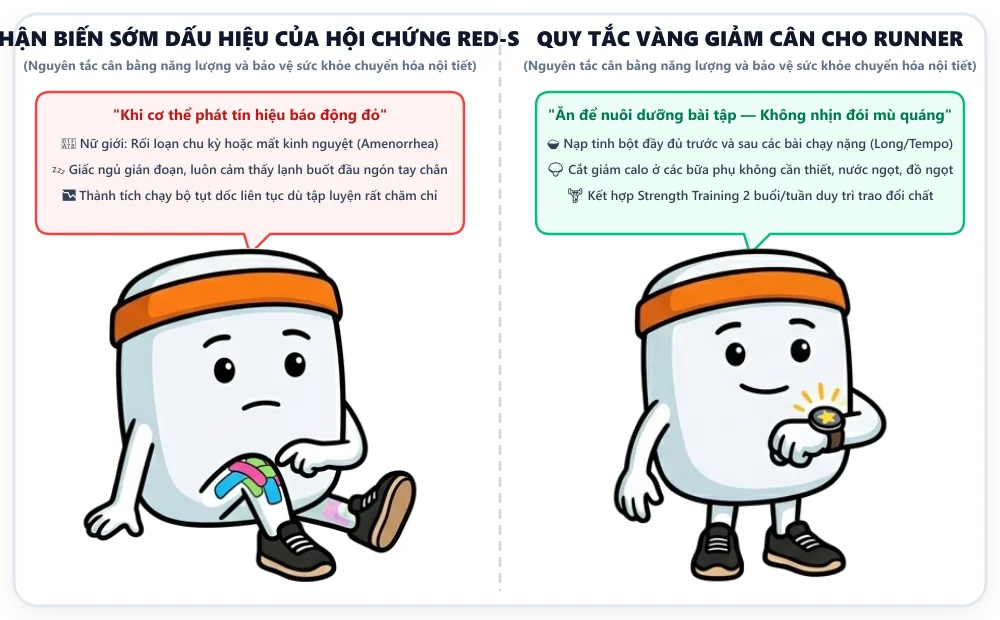
The optimal fat-loss method for endurance athletes, championed by Professor John Hawley and Dr. James Morton, is Periodized Fueling: Adjusting carbohydrate intake based on the intensity of the day’s workout.
[HIGH INTENSITY: INTERVALS / TEMPO / LONG RUNS > 90 MIN]
- Carbohydrate needs: 6g – 8g Carb / kg body weight / day.
- Fuel before, during, and after to protect immunity and maintain workout quality.
- DO NOT CREATE A CALORIC DEFICIT ON THESE DAYS.

[ZONE 2 EASY RUNS (40–50 MIN)]
- Carbohydrate needs: 3g – 4g Carb / kg body weight / day.
- Reduce refined carbs, increase fiber-rich vegetables and healthy fats.

[REST DAYS]
- Carbohydrate needs: 2g – 3g Carb / kg body weight / day.
- THIS IS THE TIME FOR A CALORIC DEFICIT (400–500 kcal).
- Increase Protein (1.8g - 2.2g/kg) for muscle repair and satiety.
5 Red Flags: When to Increase Your Caloric Intake
If you or a training partner show two or more of these signs, stop cutting calories immediately and increase intake by 300–500 kcal/day:
- Menstrual irregularities: Missing 3 consecutive cycles or cycles longer than 35 days.
- Deep bone pain: Localized pain in the shins or feet that doesn’t improve with rest (a sign of potential stress fractures).
- Abnormally low resting heart rate (< 40 bpm) with dizziness: A sign of sinus bradycardia due to cardiac muscle malnutrition, often accompanied by orthostatic hypotension.
- Persistent cold hands and feet: Even in normal temperatures (due to low T3 thyroid hormone).
- Loss of libido: A sign of severely suppressed sex hormones.
FAQ: Caloric Deficit & RED-S
1. Is it normal for female runners to lose their period?
Absolutely NOT. In the past, many mistakenly believed amenorrhea was a sign of “hard training and fitness.” Modern sports medicine confirms that exercise-induced amenorrhea is a dangerous condition indicating severely low estrogen, which can lead to irreversible bone damage if it persists for over 6 months.
2. Can men suffer from RED-S?
Yes. Research shows that 15%–25% of male marathon and ultra-runners suffer from subclinical RED-S, manifested by low total and free testosterone, reduced lumbar bone mineral density, and muscle loss.
3. What should I do first if I suspect I have RED-S?
First, increase your daily caloric intake by 300 to 600 kcal, focusing on complex carbohydrates and protein. Simultaneously, reduce your training volume by 30%–50% (cut out high-intensity speed work). Get blood work done to check hormone levels (Estradiol, Testosterone, TSH, Free T3, Ferritin, Vitamin D) and consider a DEXA scan for bone density.
Medical Disclaimer: This article is based on the IOC Consensus Statement on RED-S. If you are experiencing eating disorders or prolonged amenorrhea, please seek direct support from an endocrinologist or a sports nutritionist.
