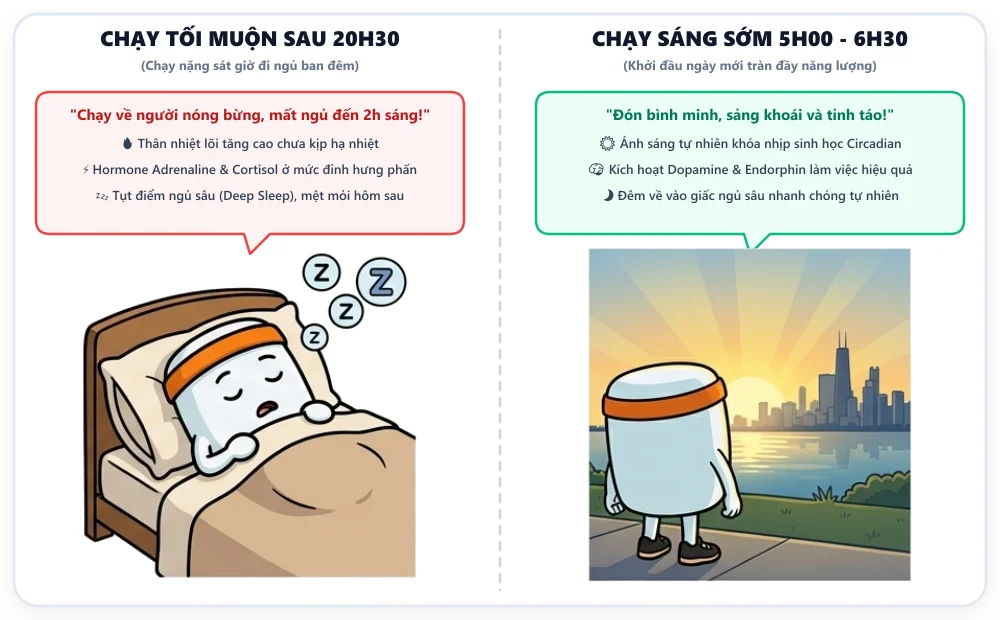
“Should I lace up at 5:00 AM to catch the sunrise, or hit the pavement at 6:00 PM after clocking out?” This is one of the oldest debates in the running community. Both time slots have their die-hard loyalists: morning runners swear by their discipline and the fresh air, while evening runners praise the feeling of loose legs and the post-work energy surge.
Through the lens of Circadian Rhythm and exercise physiology, there is no one-size-fits-all answer. Each time of day corresponds to a unique profile of hormonal, thermoregulatory, and neuromuscular states. Understanding these variables will help you choose the ideal slot for your specific goals—whether that’s fat loss, hitting a new PR, or simply staying consistent for the long haul.
The 24-Hour Biological Clock & Core Body Temperature
Your physiological functions are governed by the Suprachiasmatic Nucleus (SCN) in the brain’s hypothalamus. The two most significant factors impacting your athletic performance are your Core Body Temperature and your Hormonal Cycle.
Core Body Temperature (°C)
37.5°C ┌─────────────────────────────────────────────────── [PEAK TEMP (17h - 19h)]
       │                                                   • Max muscular power
37.0°C │                     [MIDDAY]                      • Fast-twitch muscle fiber activation
       │                     • Cardiovascular stability    • Peak FEV1 lung capacity
36.5°C │ [EARLY MORNING (5h - 7h)]
       │ • Lower temp, stiffer joints
36.0°C └─┴─────────┴─────────┴─────────┴─────────┴─────────┴─────────┴─────────┴─────────
04:00 08:00 12:00 16:00 20:00 00:00 (Time of day)- Body Temp Trough (4:00 – 6:00 AM): Your body temperature is at its lowest. Joint synovial fluid is more viscous, and tendons and ligaments are less elastic, requiring a longer warm-up.
- Body Temp Peak (16:30 – 19:00 PM): Body temperature reaches its apex. Neuromuscular transmission speed increases by about 5%, and metabolic enzymes operate at peak efficiency.
Morning Runs: The Kingdom of Fat Oxidation, Discipline & Mental Clarity
Training between 5:00 AM and 7:00 AM offers distinct advantages for psychological consistency and base aerobic metabolism.
┌────────────────────────────────────────────────────────────────────────┐
│                      BENEFITS OF MORNING RUNNING                       │
├────────────────────────────────────────────────────────────────────────┤
│ • Optimized Fat Oxidation: Lower liver glycogen and insulin levels     │
│   help trigger free fatty acid oxidation (Zone 2).                     │
│ • Endorphin & Dopamine Spike: Provides a mood boost and sharpen focus   │
│   for the 8-hour workday ahead.                                        │
│ • Highest Consistency Rate: Prevents 100% of 'life-happens' interruptions │
│   (late meetings, traffic, social obligations).                        │
│ • Ideal for Local Climates: Avoids the harsh tropical midday heat and   │
│   the peak-hour traffic pollution found in the evening.                │
└────────────────────────────────────────────────────────────────────────┘
Physiological Downsides to Consider:
- Spinal Stiffness: After 8 hours of sleep, your spinal discs are hydrated and swollen, which temporarily reduces the flexibility of your lower back.
- Blood Viscosity & Morning Cortisol: Blood pressure and platelet stickiness tend to rise early in the day (the “Morning Blood Pressure Surge”). Morning runners should drink 200–300ml of water upon waking to aid hydration.
- Longer Warm-ups Required: Dedicate 8–12 minutes to a dynamic warm-up to increase soft-tissue temperature before attempting faster paces.
Evening Runs: The Peak of Power, Speed & Stress Relief
Training between 16:30 and 19:30 is the golden window for high-intensity work that requires explosive muscular output.
┌────────────────────────────────────────────────────────────────────────┐
│                      BENEFITS OF EVENING RUNNING                       │
├────────────────────────────────────────────────────────────────────────┤
│ • Peak Muscular Power: Maximum torque and explosive power are 5%–7%    │
│   higher than early morning.                                           │
│ • Optimized Lung Function: Forced Vital Capacity (FVC) and FEV1 hit     │
│   their peak around 5:00 PM.                                           │
│ • Full Fuel Tanks: Muscles are primed with glycogen from the day's     │
│   meals, perfect for high-intensity intervals or tempo runs.           │
│ • Mental Stress Relief: Burns off cortisol built up during a hectic    │
│   day, helping to reset your emotional balance.                        │
└────────────────────────────────────────────────────────────────────────┘
Evening Downsides to Control:
- Sleep Disruption: Running high-intensity (Zone 4–5) within 2 hours of bedtime can spike adrenaline and keep body temperature elevated, which inhibits Melatonin production and disrupts sleep quality.
- Visibility Risks: Always wear reflective gear or carry a headlamp to ensure you are seen by traffic.
Comparison Table: Morning vs. Evening
| Feature | Morning Runs (5:00 – 7:00) | Evening Runs (16:30 – 19:30) |
|---|---|---|
| Optimal Training | Zone 2 Aerobic, Recovery runs, Fat loss | Intervals, Tempo runs, PR attempts |
| Fuel Status | Low liver glycogen, higher fat oxidation | Glycogen-stocked from daily meals |
| Warm-up Time | 8 – 12 minutes (needed) | 5 – 7 minutes (body is already warm) |
| Consistency | Very high (less likely to be disrupted) | Prone to interruptions from work/fatigue |
| Impact on Sleep | Improves sleep depth | Good if finished ≥ 2.5 hours before bed |
The Strategic Training Matrix
Instead of sticking to one time slot all week, you can mix and match to align with your body’s needs:
[STRATEGIC WEEKLY TRAINING SCHEDULE]
├── Tuesday (17:30): Interval / Tempo Run ➔ Utilize peak body temp & power
├── Wednesday (05:30): 4–5km Recovery Run ➔ Gentle movement, flush out soreness
├── Thursday (17:30): Threshold Run ➔ Maximize lung capacity & power
├── Saturday (05:30): Long Run 15–25km ➔ Beat the heat & simulate race start times
└── Sunday: Total Rest or Yoga
Pro Tip for Race Day: Most marathons start between 3:00 and 5:00 AM. If you only train in the evening, your body will face “circadian shock” on race day. Shift to morning sessions for at least 4–6 weeks prior to your race to sync your digestion and cardiovascular rhythm.
Environmental Factors in Urban Areas
In cities like Hanoi or Ho Chi Minh City, environmental factors heavily influence your choice:
[AIR QUALITY & THERMAL INVERSION]
- During winter, thermal inversion can trap PM2.5 dust at ground level
  between 5:00 and 7:00 AM.
  ➔ Check the AQI app; if AQI > 150, hit the treadmill or shift to the evening.

[SUMMER HEAT & HUMIDITY]
- In tropical summers, temperatures at 5:00 PM can still hover at 35–37°C
  due to the urban heat island effect from asphalt.
  ➔ Early morning is often the only safe option to avoid heat stroke.
Frequently Asked Questions (FAQ)
1. Is running at 9:00 PM good?
It’s certainly better than sitting on the couch! However, keep the intensity low (Zone 1–2), take a warm shower after, and skip the caffeine to ensure you can still fall asleep.
2. Do “Night Owls” have to train in the morning?
About 20–30% of the population are genetically wired as “Night Owls,” with peak alertness occurring 2–3 hours later than average. If 5:00 AM wake-ups leave you chronically sleep-deprived, prioritize evening training (17h–19h) for better results.

3. Should I eat before a morning run?
For runs under 45 minutes at an easy pace, water is fine. For anything over 60 minutes or high-intensity work, consume a small, easily digestible snack (a banana or toast with honey) 20–30 minutes before starting.
Conclusion: The best time to run is the time that fits your life and helps you stay consistent month after month, year after year.
