Lab Specs & Real-World Weight
The arrival of a new iteration in this iconic stability line always attracts keen interest from the serious running community. Opting to refine core values rather than completely rebuild from scratch helps the latest version maintain the trust of its loyal fan base. Measurements from the lab and real-world road testing reveal a well-balanced overall architecture.
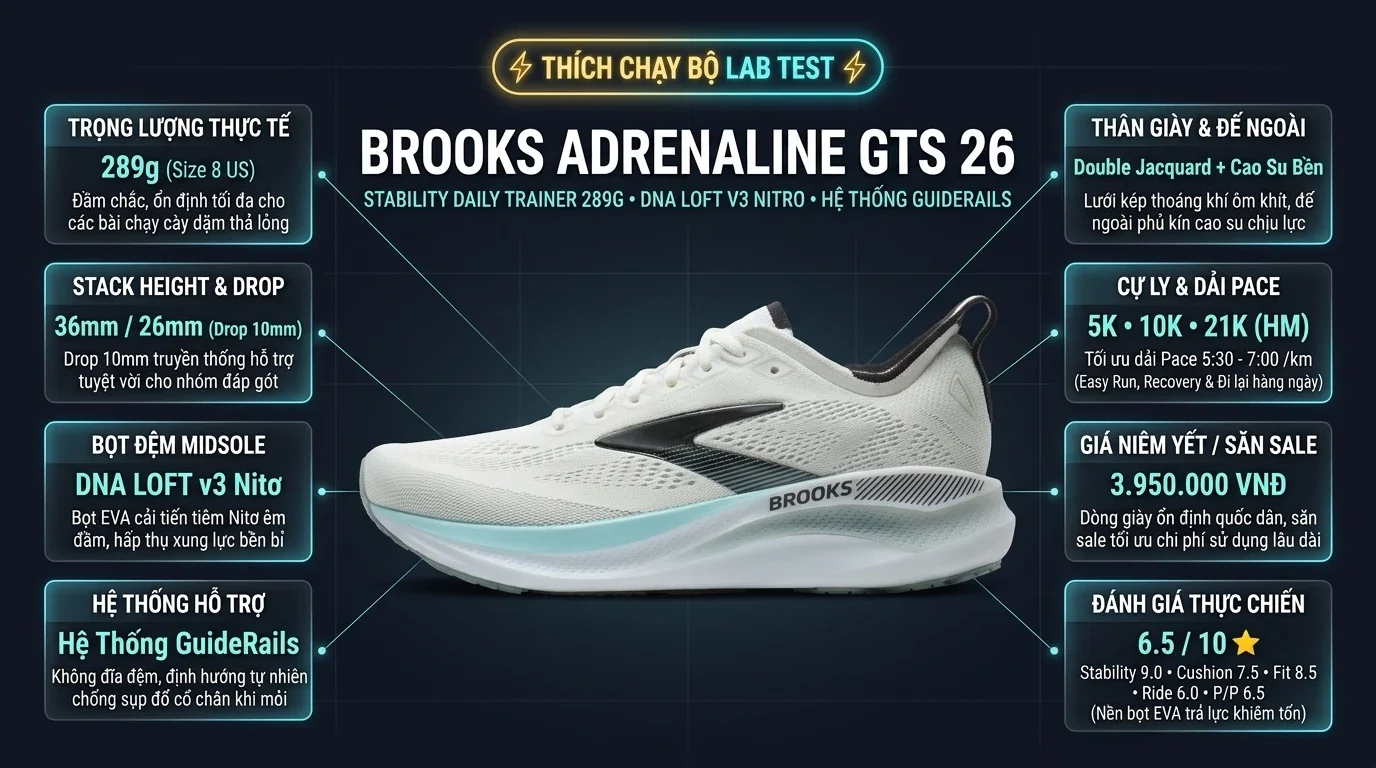
- Real-World Weight: Ranges from 286g to 292g (10.1 oz to 10.3 oz, centered at a standard 289g / 10.2 oz for a US Men’s size 8), reflecting the dense, planted feel typical of a traditional support shoe.
- Stack Height: 36mm in the heel and 26mm in the forefoot.
- Heel-to-Toe Drop: 10mm offset, preserving a traditional ramp angle that remains extremely friendly to rearfoot and heel strikers.
- Midsole Technology: Retuned nitrogen-infused DNA LOFT v3 foam built upon an EVA formulation base.
- Support System: Plate-free GuideRails system, focusing on natural biomechanical guidance rather than aggressive foot correction.
- Outsole: High-abrasion durable rubber compound covering key ground impact zones.
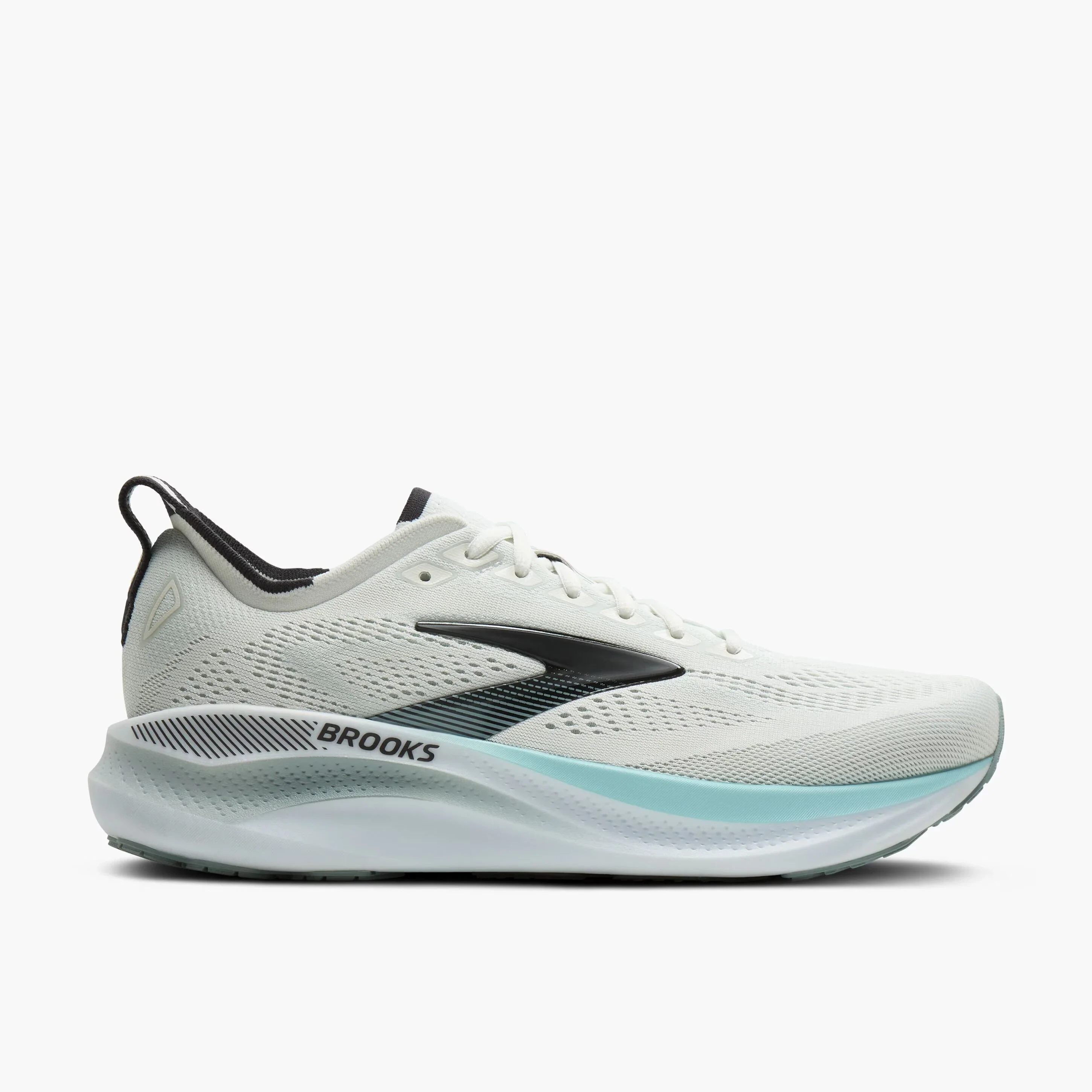
- Upper: Engineered double jacquard air mesh coupled with a plush flat knit tongue.
Foam Technology & Shock Absorption
At the heart of the midsole sits a retuned formulation of nitrogen-infused DNA LOFT v3 foam. The gas-injection process creates a fine micro-cellular structure with millions of tiny gas pockets trapped inside the matrix. Compared to the previous iteration, this updated foam has been recalibrated for compression and step-in softness, yielding a noticeably smoother heel-to-toe transition from impact to toe-off.
However, even with these incremental refinements to DNA LOFT v3, the foundational compound remains rooted in Ethylene-Vinyl Acetate (EVA). Consequently, the energy storage and energy return of the midsole cannot match modern daily trainers or super trainers powered by next-generation supercritical foams like PEBA, ATPU, or TPEE. The spring back at footstrike remains modest, offering a muted ground feel rather than an energetic, catapulting bounce.
Initial step-in feel is firm and planted, completely devoid of squishy instability or excessive sink-in depth. At moderate exercise intensities, the foam effectively dampens harsh ground impact forces from concrete and asphalt roads, safeguarding the knee joints and ankles from sudden stress. For runners with a standard body weight under 75kg (165 lbs), the foam compression keeps the stride rhythm steady, focusing maximum impact protection toward the heel strike zone.
Real-World Road Performance: Optimal Pace & Stability
When taken out onto actual road testing on local running routes, the modest energy return of the EVA foam clearly dictates the shoe’s best use case: easy runs, recovery sessions, daily walks, or casual wear. Within a pace range of 5:30 to 7:00 /km (8:50 to 11:15 min/mile), the chassis leans heavily on durability and structural integrity, preserving a consistent stride posture across short-to-medium distances.
The real standout feature is the signature GuideRails system. Rather than using rigid plastic medial posts jammed under the arch to force correction like legacy motion-control shoes, GuideRails operates like a soft bowling alley bumper system. The mechanism only engages when your body fatigues during the later stages of a run, precisely when stride mechanics collapse or ankles begin to roll inward.
Instead of twisting the foot into an unnatural position, the shoe quietly keeps knee alignment and ankle abduction within a safe, natural range of motion. As a result, calf tightness and post-run joint fatigue are substantially reduced, building strong confidence for daily high-frequency training.
Head-to-Head Comparison: Predecessors & Class Rivals
To properly evaluate the evolution of this shoe, it must be measured directly against its immediate predecessor and current category competitors. Instead of altering the geometry entirely, this model focuses on subtle refinements that deliver practical gains.
- Versus Predecessor: The biggest change lies not in the outsole frame, but in the smoother transition feel brought by the recalibrated DNA LOFT v3 foam density. Weight floats between 286g and 292g—slightly heavier in certain regional variants due to added collar padding and tongue updates—but this trade-off delivers a noticeably cozier heel hold.
- Forefoot Flexibility: The toe-off phase in this updated version feels slightly fluid despite the slightly heavier static weight on the scale. This subtle enhancement stems directly from the adjusted compression rate of the EVA midsole formulation.
- Versus the Broader Daily Trainer Category: This model lands strictly in the middle of the pack among modern daily trainers. Constrained by its EVA foundation, it cannot compete in propulsion or pop against rivals utilizing PEBA or TPEE foams, but it counters with exceptionally reliable, predictable stability.
Upper Architecture & Heel Lockdown
The upper is a highlight of the shoe, built around an inviting step-in experience. The engineered double jacquard air mesh features strategic ventilation zones that keep feet cool and dry even in warm, humid tropical conditions.
The flat knit tongue pairs with a cushioned collar to hug the instep gently, eliminating lace pressure and lace bite completely. The eyelet layout is well-proportioned, featuring a functional top eyelet that allows runners with narrow heels to execute a secure runner’s loop (heel lock lace setup).
A handy finger pull loop is added to the rear heel, making entry quick and effortless. Inside, a sturdy heel counter reinforced with thick memory foam locks the calcaneus down firmly, eliminating any heel slippage over long outings.
Technical Limitations & Long-Distance Considerations
Despite its strength in stability and protection, this shoe has clear technical limitations. A weight of 286g to 292g combined with the low responsiveness of EVA foam makes it thoroughly unsuited for fast speedwork, interval sessions, or tempo runs. When pushed below a 5:00 /km pace (8:00 min/mile), the shoe feels heavy and lacks the snappy bounce needed to support a quick leg turnover.
Additionally, the 26mm forefoot stack height offers relatively modest cushioning for forefoot or midfoot strikers. The lack of deep forefoot foam combined with low energy return means forefoot-heavy runners may experience foot muscle fatigue during long-distance volume workouts.
Ideal Runner Profile & Who Should Avoid It
Understanding the biomechanical characteristics of this shoe helps identify who will benefit most, preventing mismatched expectations and poor riding experiences.
- Ideal Runner Profile: Runners seeking a dependable shoe for walking, casual wear, easy recovery runs, and daily logging; heel strikers who experience mild-to-moderate overpronation when fatigued; and Brooks loyalists looking for familiar, reliable stability.
- Who Should Avoid It: Runners seeking speed workouts, explosive propulsion, or super-foam bounce (PEBA, ATPU, TPEE); forefoot strikers needing deep cushioning under the toes; or runners hunting for a lightweight race-day shoe.
Market Positioning, MSRP & Deal Hunting Tips
This shoe sits in the premium tier of daily stability running shoes. International MSRP converts to approximately $140 USD (around 3,950,000 VND). This standard retail price tag is relatively high when weighed against the real-world performance of an EVA-based midsole in the modern foam era.
To maximize value, runners are advised against paying full MSRP upfront. Waiting for distributor promotional events or seasonal sales to grab the pair around 2,500,000 VND to 2,900,000 VND ($100–$115 USD equivalent) yields a far more reasonable price-to-performance ratio.
Shoe Rotation Matrix
Structuring a functional shoe rotation maximizes training effectiveness and extends the lifespan of each pair. Within a balanced running shoe rotation, this model shines as a dedicated workhorse for daily walking, easy runs, and active recovery sessions.
Runners should pair this shoe with a PEBA or TPEE-based super trainer or daily trainer for workout days and long runs, creating a cost-effective rotation that reserves this stability shoe for low-intensity volume.
Final Verdict & Performance Scorecard
This shoe maintains its long-standing reputation for reliable stability and upper comfort. However, its continued reliance on an EVA-based foam limits energy return compared to contemporary trainers powered by PEBA or ATPU. The high full retail price lowers its competitive edge, making it a compelling buy primarily when snagged at a strong discount.
- Upper & Fit: 8.0 / 10
- Cushioning: 7.0 / 10
- Stability Support: 8.5 / 10
- Ride & Responsiveness: 6.0 / 10
- Value for Money: 6.0 / 10 (At Full MSRP) | 7.0 / 10 (On Sale)
- OVERALL RATING: 6.0 / 10 ⭐ (At Full MSRP) • 7.0 / 10 ⭐ (On Sale)
Frequently Asked Questions (FAQ)
Is this shoe available in a wide fit option?
Yes. Brooks offers multiple width options for this model, including a 2E Wide version for runners with wider feet. Selecting the correct width ensures the forefoot and toe box remain uncompressed during long runs.
Does the retuned EVA foam bounce like PEBA super-foams?
Not at all. While nitrogen injection increases cell uniformity and softness, the core material remains EVA. Energy return and springiness are significantly lower than PEBA, ATPU, or TPEE foams found in modern super trainers. It is tuned for steady easy runs rather than speed.
What is the expected durability of the rubber outsole?
The thick rubber coverage over major landing zones provides exceptional wear resistance. The outsole can easily last between 800km to 1,000km (500 to 620 miles) depending on running surface roughness and runner body weight.